
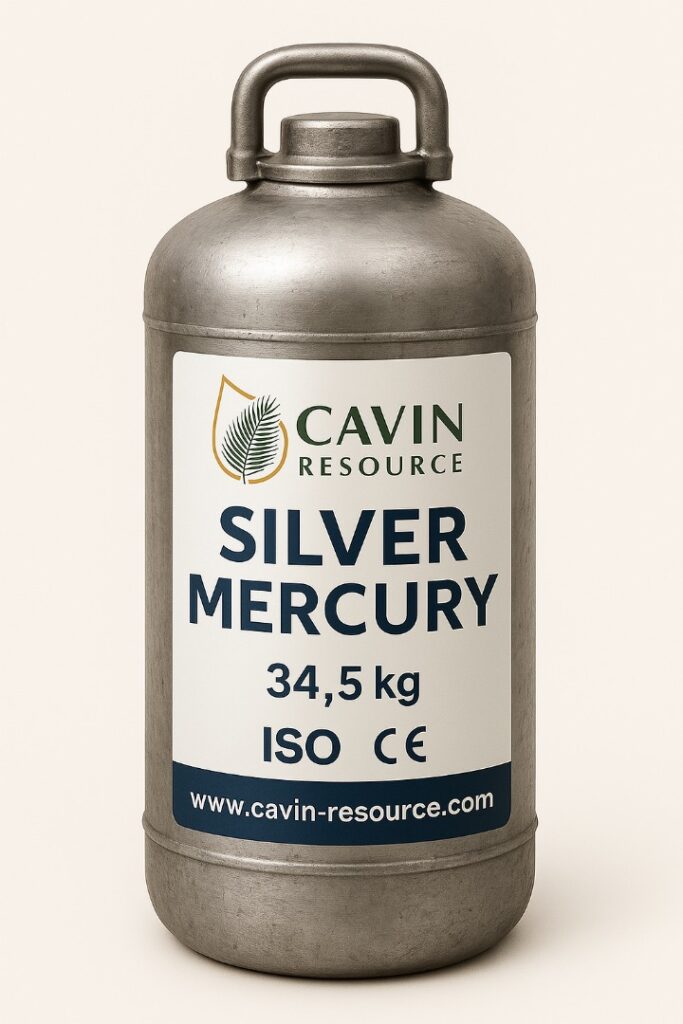
Silver Liquid Mercury 34.5kg flask means elemental mercury packed inside a standard steel container. This isn’t just an ordinary industrial product—it’s a tightly controlled, toxic substance, so you really have to treat it with respect.
If you represent an authorised organisation, always check the elemental mercury supplier’s licences, test records, and traceability before moving forward. You’ll also need approved packaging, secure storage, lawful transport, and a plan for handling spills or disposal—no shortcuts here.
This article covers permitted uses, mining-related restrictions, health risks, environmental duties, and the checks you should complete before procurement.
Key Takeaways
- A 34.5kg flask contains a large amount of hazardous elemental mercury.
- Legal controls and supplier records must support every authorised transaction.
- Safe storage, transport, use, and disposal require documented procedures.
What Silver Liquid Mercury 34.5kg Represents
A 34.5 kg flask is just a standard bulk package for elemental mercury—it’s not a different chemical form. The material’s properties, stated purity, and container details determine whether it fits a lawful laboratory or industrial use.
Elemental Mercury Properties
Elemental mercury, or Hg, is a dense, silvery metal that stays liquid at room temperature. It freezes at about −38.8°C and boils at roughly 356.7°C.
Its vapour doesn’t have a reliable warning smell, so you can’t use odour to judge exposure risk. Mercury can release harmful vapour if the flask leaks, breaks, or stays open.
Handle it only in approved facilities with good ventilation, spill controls, protective equipment, and trained staff. Never use a vacuum cleaner or sweep a spill—those actions just spread droplets and vapour.
A silver mercury 34.5kg flask holds about 34.5 kilograms of liquid by net weight. The steel flask adds packaging weight, so your shipping weight will be higher.
Storage, transport, and disposal have to follow your country’s laws.
Traditional Flask Weights And Labelling
The 34.5 kg mercury flask is the standard bulk packaging size for elemental mercury. Sellers might call it a steel flask, iron cylinder, or 34 kg flask, but always confirm the net quantity—don’t just trust the title.
A proper label should identify:
- Element: elemental mercury or quicksilver
- Chemical symbol: Hg
- Net weight: 34.5 kg
- Batch or lot number
- Purity and test method
- Hazard information
- Supplier and origin
- Transport and storage instructions
If you contact a 34.5 kg mercury flask supplier, ask for the safety data sheet, current regulatory documents, and a photo showing the intact seal and label. A legitimate Hg mercury supplier should also explain whether the product can legally enter your country and if restricted-use permits apply.
Purity Grades And Certificate Terminology
Terms like 99.99%, 99.999%, and 99.99995% describe the stated proportion of mercury by mass, but they don’t prove the product is safe or legal for your process. “High purity elemental mercury” should always come with a test method, batch number, and certificate of analysis.
A certificate might list mercury content, detected impurities, sampling details, and the testing lab. Check whether the result is a minimum spec or a measured value.
“Free from heavy metals” can be misleading unless the certificate names the tested elements and detection limits. When reviewing a mercury 99.99 supplier or quicksilver mercury supplier, verify the certificate against the container label and purchase documents. Don’t treat marketing claims as proof of grade, origin, or regulatory compliance.
Legal Controls And Responsible Trade
You have to treat a 34.5 kg flask of liquid mercury as a controlled hazardous substance, not just another industrial commodity. Legal trade depends on the source country, destination, transport route, intended use, and documentation.
The Minamata Convention
The Minamata Convention on Mercury controls international trade in mercury and aims to reduce health and environmental risks. Countries that joined the convention may restrict imports and exports, require prior consent, or ban certain uses.
Before you place an order, check whether both the exporting and importing countries are parties to the convention. Also confirm if national rules impose stricter controls. Gold mining, laboratory work, manufacturing, and other uses might face different requirements.
A reputable international mercury supplier, virgin mercury supplier, or mercury supplier Malaysia should provide the product’s origin, purity, safety data, and intended-use info. These details don’t replace approval from your authorities.
Import, Export And Transit Requirements
You may need permits for import, export, re-export, or transit. Requirements can include an import licence, export authorisation, customs declarations, a hazardous-goods transport document, and proof of lawful end use.
Check the rules with customs, environmental, and chemical regulators in every country on the route. A company calling itself a mercury exporter Malaysia doesn’t automatically have permission to ship mercury to your country. Ask for current licences and confirm them independently.
The shipment must use approved packaging, hazard labels, and a suitable carrier. Keep the 34.5 kg flask sealed, protected from damage, and accompanied by its safety data sheet and transport classification.
End-Use Restrictions And Record Keeping
Identify the final user and state the intended purpose before purchase. Some places restrict mercury in artisanal and small-scale gold mining, consumer products, medical equipment, or manufacturing. Don’t buy, resell, or transfer it for an unapproved use.
Keep invoices, contracts, permits, customs records, safety data sheets, batch details, and delivery records. Record the quantity received, stored, used, transferred, or returned. Regulators might ask for these records years later.
Store the flask in a secure, ventilated area with spill controls and restricted access. Train staff in mercury hazards and arrange recovery or disposal through an authorised hazardous-waste provider.
Assessing Supplier Documentation And Traceability
Before you buy a 34.5 kg mercury flask, verify the product identity, test results, legal status, and transport records. Reliable documents should match the supplier, batch, quantity, packaging, and destination requirements.
Safety Data Sheets And Certificates Of Analysis
Request a current Safety Data Sheet (SDS) and a batch-specific Certificate of Analysis (CoA). The SDS should identify mercury, describe its toxicity, list required protective equipment, explain spill response, and state storage and transport controls.
The CoA should show the test method, test date, batch number, net weight, and measured purity. If the document doesn’t include a laboratory name, analyst approval, or impurity test results, treat claims like “99.999%” as unverified.
Check that the CoA matches the exact flask offered by the high purity mercury supplier. A general product sheet doesn’t prove the quality of a particular shipment, whether you’re dealing with an industrial mercury supplier or a mercury wholesale supplier.
Origin, Chain Of Custody And Licensing
Ask for the legal company name, registered address, export authorisation, and details of the permitted end use. Confirm whether the supplier holds the licences needed to sell, store, package, and transport mercury in both the exporting and importing countries.
Traceability records should connect the material to its source, processing site, batch, flask number, and shipping documents. For a mercury flask wholesale order or silver liquid mercury wholesale purchase, request commercial invoices, packing lists, transport classifications, and customs records before payment.
Don’t rely just on claims of “full traceability” or “verified export documents.” Your national environmental, chemical, and customs authorities can confirm whether the proposed transaction is lawful.
Recognising Misleading Purity Or Availability Claims
Terms like “silver mercury”, “liquid silver mercury”, and “virgin mercury” often reflect marketing language, not a recognised legal grade. Mercury is the chemical element, so require its CAS number, stated composition, and impurity limits instead of trusting colour or trade names.
If a liquid mercury supplier promises immediate worldwide delivery, unusually low prices, or payment without formal documents, be cautious. A legitimate supplier should explain stock status, flask condition, hazardous-goods classification, and delivery restrictions.
Check whether the quoted 34.5 kg refers to net mercury weight or the combined weight of flask and contents. Confirm the seal, container material, inspection records, insurance, and responsibility for damage before accepting a shipment.
Safe Packaging, Storage And Transport
Keep 34.5 kg of liquid mercury in a sealed, approved container that prevents leaks, vapour release, and damage during handling. Storage and transport also need correct labels, controlled access, good ventilation, and procedures for spills or damaged packaging.
Flask Integrity And Secondary Containment
Use a purpose-built steel flask with a secure, compatible closure. Before accepting a shipment from a bulk liquid mercury supplier, inspect the flask for dents, corrosion, loose caps, damaged seals, or leakage. Don’t open or transfer the material unless your procedures allow it and trained staff supervise the work.
Keep each flask upright on a stable, level surface. Place it inside secondary containment that can hold the full contents if the main container fails.
Keep mercury away from drains, sinks, floor cracks, heat sources, and chemicals that might damage the container. Store bulk elemental mercury in a locked, well-ventilated area with restricted access.
Keep an up-to-date inventory showing the container number, net weight, purity, storage location, and inspection dates.
Dangerous-Goods Classification
Elemental mercury is toxic and must move under dangerous-goods rules for the route and transport method. Your silver liquid mercury supplier should provide the current Safety Data Sheet, transport classification, packaging certification, labels, and shipping documents.
Use approved packaging and a carrier authorised to handle hazardous materials. Don’t rely on ordinary freight services or informal transport.
Confirm requirements for road, sea, air, and international shipments before booking. Your shipping records should identify the material accurately, state the quantity, and include emergency contact details.
Check import, export, waste, and environmental rules in every country involved. Requirements can differ between jurisdictions.
Spill Prevention And Emergency Preparedness
Train staff to recognise damaged packaging and mercury contamination. Keep a mercury spill kit nearby with proper collection tools, sealable containers, warning signs, and protective equipment.
Don’t use a broom, household vacuum, or compressed air—those just spread droplets and increase vapour exposure. If a flask leaks, isolate the area, keep people away, improve ventilation if safe, and prevent mercury from reaching drains.
Don’t touch the material directly. Contact your emergency coordinator and a qualified hazardous-materials contractor, then follow the Safety Data Sheet and local reporting rules.
Inspect storage areas and flasks at planned intervals. Record defects, spills, clean-up actions, and waste transfers for traceability.
Permitted Industrial And Scientific Uses
You might see 34.5 kg flasks of high-purity elemental mercury in licensed laboratories, specialised manufacturing, or approved industrial processes. Since mercury is toxic and tightly regulated, buy it only through an authorised industrial mercury supplier or liquid mercury supplier, and make sure your intended use fits local rules.
Laboratory And Calibration Applications
In labs, you might use elemental mercury in approved instruments and reference systems that rely on its stable physical properties. Its high density, electrical conductivity, and predictable thermal expansion have supported work with pressure gauges, thermometers, barometers, and other precision equipment.
Mercury also appears in calibration work for older instruments, provided trained staff use sealed systems and suitable controls. A 34.5 kg flask is a bulk package, not a normal lab working container.
Your facility should transfer only the required amount inside a controlled area, maintain spill-response equipment, and keep exposure records. Before placing an order, check the supplier’s certificate of analysis, purity grade, packaging details, and traceability documents.
It’s smart to verify transport, storage, waste, and reporting requirements with your regulator too.
Manufacturing And Legacy Equipment
Some approved manufacturing processes still use mercury because certain designs just rely on its liquid-metal properties. You’ll see this in specialised electrical devices, research equipment, and older industrial instruments.
Many applications have dropped mercury since it can harm people and pollute soil and water when released. It’s a nasty business if you get it wrong.
Check if your equipment actually permits mercury and whether there’s a safer substitute. Keep mercury in a sealed, compatible container inside secondary containment—no open trays, unsealed vessels, or makeshift storage, please.
If you’re handling a 34.5 kg flask, you need controlled handling, trained staff, and regular inventory checks. Your industrial mercury supplier should hand over safety data, batch details, and arrange legal transport.
Don’t assume that bulk packaging means you can use or dispose of it however you want. That’s a shortcut to trouble.
Substitution And Mercury-Free Alternatives
Before buying high-purity elemental mercury, take a hard look at mercury-free alternatives. Digital, alcohol, thermistor, and resistance-based sensors can usually replace mercury thermometers and measuring devices.
Electronic pressure sensors and sealed solid-state switches often do the trick for other mercury components. In manufacturing, you might swap in non-mercury catalysts, electronic controls, or different lamp and battery designs.
The best option depends on your needs—accuracy, temperature range, pressure, chemical compatibility, and what you’ve already got installed. It’s not always straightforward.
If you swap out mercury equipment, get a licensed hazardous-waste contractor for removal and recycling. Don’t pour mercury down the drain or toss it in the regular trash.
Keep records of what you removed, what you put in its place, and where the waste ended up. That paperwork matters more than you’d think.
Mining-Related Risks And Regulatory Limits
If you use liquid mercury for mining, you’re staring down serious health, environmental, and legal risks. Safe practice means exposure controls, trained workers, secure storage, accurate records, and following both national rules and the Minamata Convention.
Health And Environmental Harm From Amalgamation
When you use mercury for gold recovery, it forms an amalgam with gold—but heating that releases toxic mercury vapour. You can breathe it in without ever seeing or smelling a thing.
Repeated exposure can damage the nervous system, kidneys, lungs, and developing kids. Symptoms might show up as tremors, memory lapses, mood swings, breathing trouble, or kidney problems.
Amalgamation also contaminates soil, sediment, and water. Mercury turns into methylmercury in aquatic environments, and fish and other organisms soak it up.
People then get exposed through contaminated food. It’s a chain reaction you really don’t want to start.
Don’t ever burn amalgam indoors, near homes, or on open ground. Workers need local exhaust ventilation, the right respiratory protection (after a real risk assessment), protective clothing, and hygiene facilities.
Skip eating, drinking, or smoking in contaminated work areas. That’s just asking for trouble.
Gold Recovery Controls And Formalisation
If your operation handles elemental mercury in mining, you need a documented control plan. Don’t just trust supplier claims like “high purity” or “silver liquid mercury”—purity doesn’t make it safe.
Your mining mercury supplier should provide a safety data sheet, correct labels, transport details, and info on national restrictions. Use closed systems, retorts, or other vapour-control gear to capture mercury during amalgam heating.
Store mercury in sealed, labelled containers in a secure, ventilated area with spill materials nearby. Track every purchase, transfer, loss, and bit of waste.
Formalisation helps by requiring permits, worker training, medical monitoring, and proper waste handling. Rules vary a lot by country—some places restrict or ban mercury supply, import, export, or use in artisanal and small-scale gold mining.
Always check with the mining and environmental authorities before buying bulk mercury for mining. Surprises here aren’t good ones.
Safer Gold Processing Alternatives
You can cut down on mercury use by improving gold recovery before treatment. Crushing, screening, gravity concentration, sluices, shaking tables, centrifuges, and better mills can separate most free gold without mercury.
Good process control means you don’t need to repeat amalgamation over and over. Where it fits, mercury-free methods include gravity recovery with direct smelting or flotation followed by controlled recovery.
The right choice depends on your ore’s mineralogy, gold particle size, water and energy access, and waste controls. Always test your ore before buying equipment—it’s not a one-size-fits-all situation.
If you still need mercury, use it with a closed retort, vapour monitoring, and trained operators. Never mix mercury with cyanide or other chemicals unless you’ve got expert process design—otherwise, you’re just making new hazards.
Health, Environmental And Disposal Obligations
Handling 34.5 kg of silver liquid mercury? You need controlled handling, trained workers, secure storage, and documented waste procedures. Local hazardous-waste rules and supplier instructions aren’t optional—whether you buy from an elemental mercury supplier or arrange wholesale delivery.
Exposure Routes And Monitoring
You mostly absorb mercury vapour by breathing contaminated air. Skin contact and accidental swallowing are also risky, especially if spills get into cracks, fabrics, or stuffy rooms.
Mercury vapour doesn’t have a warning smell, so don’t trust your nose. Always keep containers sealed, upright, and protected from knocks.
Store them in a cool, secure, well-ventilated spot with secondary containment. Eating, drinking, or smoking nearby? Bad idea.
Use a written risk assessment, proper gloves and eye protection, and only use respiratory protection under a real workplace programme. If exposure’s possible, set up air monitoring with a competent occupational-hygiene provider.
Keep records of worker training, inspections, monitoring, and any medical advice. Pregnant workers and children need extra protection—mercury can really mess with developing nervous systems.
Contaminated Waste Management
Treat leftover mercury, contaminated tools, absorbents, clothing, and broken equipment as hazardous waste. Never toss them in household bins, pour mercury down the drain, or burn contaminated stuff.
Those actions just let mercury escape into buildings, soil, water, or the wider environment. Seal waste in compatible, unbreakable containers that won’t leak or let vapour out.
Label each container with what’s inside, the hazards, date, and where it came from. Keep it in secure secondary containment while you arrange collection by an authorised hazardous-waste contractor.
Hang on to shipping and disposal records, including the waste description, quantity, carrier, destination, and what happened to it in the end. Requirements change by country and might also apply to your supplier, importer, or wholesale operation.
Check national rules before moving mercury across borders. It’s not worth guessing.
Decontamination And Incident Reporting
If a spill happens, get people out, close doors, and increase safe ventilation—but don’t spread vapour to other areas. Don’t use a vacuum cleaner, broom, mop, or regular cleaning products—those just break up mercury or spread it around.
Contact your site emergency lead and a specialist mercury-remediation contractor. They’ll use proper detection gear and collect droplets from floors, joints, and other tricky spots.
Don’t reoccupy the area until competent testing confirms vapour levels are safe. Report significant releases to the right environmental, health, and safety authorities.
Record the amount released, location, people affected, immediate controls, sampling results, and waste transfer details. If you suspect exposure—especially if you notice breathing trouble, tremors, mood changes, or weird symptoms—get medical advice fast.
Due Diligence Checklist For Authorised Organisations
Before buying 34.5 kg of silver liquid mercury, prove what you’ll use it for, check every compliance document, and make sure the shipment can legally cross borders. Keep records linking the material, supplier, transport, and final use.
Confirming Legitimate End Use
Write down exactly why you need the mercury, where you’ll use it, and who’s responsible for handling it. Your records should show the required quantity, purity, storage method, and expected use date—no vague “industrial requirement” excuses.
Confirm your organisation has the licences, permits, or approvals needed for elemental mercury in your country. Check whether your activity falls under Minamata Convention restrictions, national hazardous-substance rules, or other controls.
Before contacting a high purity or virgin mercury supplier, prepare an end-use statement on company letterhead. Include your legal name, registered address, tax or company number, site address, and authorised signatory. Don’t use a broker’s description as proof of legitimate use.
Verifying Compliance Before Purchase
Verify the supplier’s legal identity, operating address, ownership, and authority to trade mercury. Ask for the Safety Data Sheet, certificate of analysis, product spec, batch or lot number, and proof the material’s elemental mercury (Hg, CAS 7439-97-6).
Don’t just take a “mercury 99.99 supplier” claim at face value—always check independently. Make sure the stated purity matches your technical needs and the certificate lists the testing lab, method, sample date, and reporting units.
For cross-border purchases, confirm export and import permits, customs classification, packaging rules, and that the carrier will accept it—before you pay. Screen the international mercury supplier against sanctions and restricted-party lists.
Check the transport company can handle the dangerous-goods classification and provide compliant packaging and paperwork. If someone pressures you to pay quickly, skips permits, can’t verify certificates, or asks for weird payment methods, treat that as a big red flag.
Maintaining Audit-Ready Records
Create one controlled file for the 34.5 kg shipment. Keep the purchase order and contract together with supplier checks, end-use statement, permits, Safety Data Sheet, certificate of analysis, inspection results, invoices, customs documents, and dangerous-goods transport records.
When the shipment arrives, jot down the container or batch number right away. Compare the delivered quantity and packaging against the paperwork.
If you spot damage, leakage, seal changes, or a weird difference in weight, make a note and report it before anyone uses the material. Store copies of everything in a secure system, and don’t let just anyone poke around—only authorised staff should have access.
Keep an inventory ledger that tracks receipt, storage location, transfers, use, losses, and what’s still left. Hold onto these records for however long your national rules demand, even if the mercury 99.99% supplier claims to have their own archive.
Every so often, review supplier approval, permits, storage controls, and staff training. It’s a hassle, but skipping it just isn’t worth the risk.
 English
 Français
 Afrikaans
 简体中文
简体中文 Čeština
 Suomi
Suomi Deutsch
 हिन्दी
 עִבְרִית
 Norsk bokmål
 Tiếng Việt
 Türkçe
 العربية
 Svenska
 Kiswahili
 Irish
Irish Latin
Latin Polski
 Português do Brasil
 Español de Colombia
 தமிழ்
தமிழ் العربية المغربية
 Dansk
Dansk 日本語
日本語 Hrvatski
 Nederlands
 Eesti
Eesti Luxembourgish
 Bahasa Melayu
 Português
 Ελληνικά
 ဗမာစာ
ဗမာစာ 한국어
한국어 Cymraeg
 Українська
 Slovenščina
 Հայերեն
 Magyar
 Русский
 Tajik
Tajik فارسی
فارسی O‘zbekcha
 Sundanese
 Bashkir
 বাংলা
বাংলা Bahasa Indonesia
 Беларуская мова
 Azərbaycan dili
 Aragonés
 Bosanski
 Dari
Dari ქართული
 Latviešu valoda
 Lingala
 Frysk
Frysk Română
 Gàidhlig
 Turkmen
 Español de Puerto Rico
 ไทย
ไทย 繁體中文
繁體中文 Slovenčina
 Српски језик
 Македонски јазик
 नेपाली
 Монгол
 Maltese
 سنڌي
سنڌي ພາສາລາວ
 Кыргызча
 Қазақ тілі
 Íslenska
 ភាសាខ្មែរ
 Български
 Bhojpuri
 Català
 (فارسی (افغانستان
0 Comments